Planning to wed in Scotland? Want to honor your Scottish ancestry during your nuptials? If so, then you may consider including components of a traditional Scottish wedding into your big day.
Disclosure: This guide to Scottish wedding traditions may contain affiliate links. I may earn a commission if you click on one of these partner links and make a purchase.
Four Components of a Traditional Scottish Wedding
A traditional Scottish wedding is a vibrant tapestry woven with rich history, cultural significance, and a touch of whimsy.
These ceremonies are renowned for their unique customs and deep-rooted traditions that celebrate not only the union of two individuals but also the heritage of Scotland itself.
Understanding the key elements of a Scottish wedding can be both informative and inspiring for anyone intrigued by cultural customs and engaged in wedding planning.
Whether you’re tying the knot on Scottish soil or planning on acknowledging your heritage in slightly sunnier surroundings, the following four components encapsulate the essence of a traditional Scottish wedding.
The Wearing of Kilts
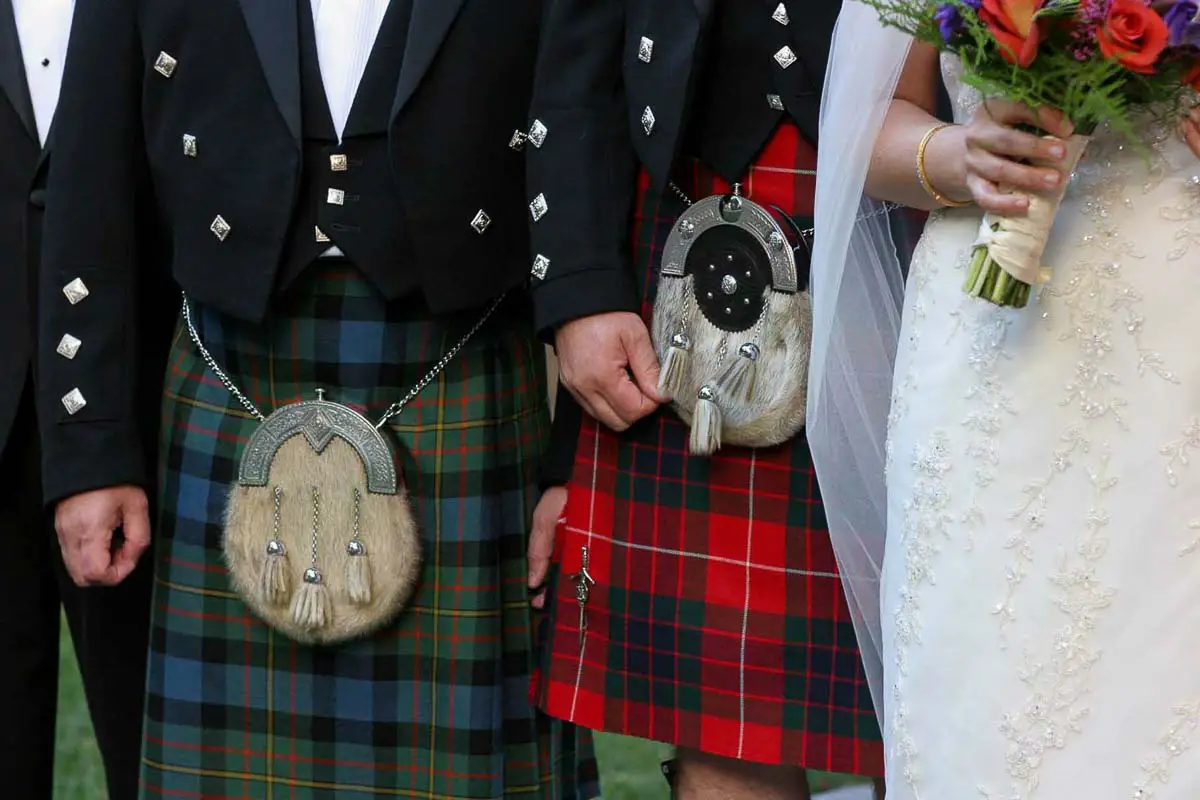
Arguably, the most iconic symbol of a Scottish wedding is the kilt. This traditional garment, made from tartan fabric, is worn by the groom, groomsmen, and often the male guests.
The kilt’s history dates back to the 16th century and has become a national symbol of Scotland. Each clan has its own distinctive tartan pattern, and wearing a kilt is a nod to one’s ancestry and family pride.
At weddings, the kilt is often paired with formal attire such as a Prince Charlie jacket or an Argyll jacket, completing the distinctive and elegant look.
Beyond its visual appeal, the kilt serves as a powerful reminder of Scotland’s rich cultural tapestry, and if you have Scottish ancestry, it’s a wonderful way to honor your heritage on this most significant of days.
The Handfasting Ceremony
The handfasting ceremony is a heartfelt and deeply symbolic part of many Scottish weddings.
This ancient custom involves tying the hands of the bride and groom together with cords or ribbons, symbolizing their union and commitment.
Historically, this practice was a form of betrothal or engagement, but today it is often incorporated into wedding ceremonies as a meaningful gesture of unity.
The act of handfasting represents the couple’s intention to stand by each other and marks the beginning of their journey as partners in life.
The Use of Bagpipes
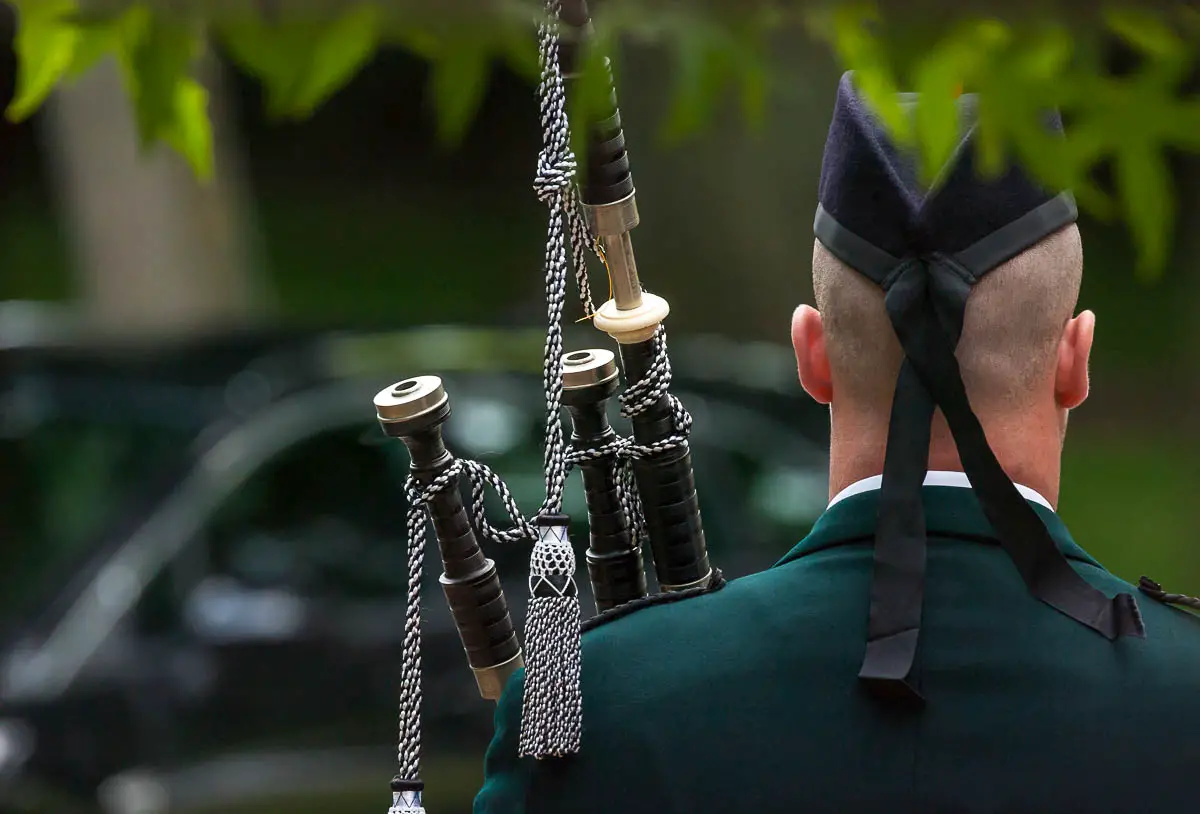
The hauntingly beautiful sound of bagpipes is synonymous with Scottish celebrations, and weddings are no exception.
Bagpipes have been part of Scottish culture for centuries. Originally used in military contexts, they later became a staple at ceremonial events.
At Scottish weddings, a piper often plays as the bride arrives and during the procession, adding a majestic and unforgettable auditory backdrop to the day’s events.
The music of the bagpipes is not just traditional; it evokes deep emotions and sets a tone of grandeur and festivity that resonates with all attendees.
The Traditional Ceilidh Dance
No Scottish wedding would be complete without a ceilidh, a traditional Gaelic social gathering that involves folk music and dancing.
The ceilidh dance is a lively affair. Guests of all ages are encouraged to participate, creating an atmosphere of joy, laughter, and camaraderie.
This communal dance celebrates togetherness and is a delightful way to conclude the day’s festivities. It will leave guests with cherished memories and a deeper appreciation for Scottish cultural traditions.
A Matrimonial Hootenanny
A traditional Scottish wedding is a celebration of love interwoven with history and culture.
From the distinctive kilts and the heartfelt handfasting ceremony to the evocative sound of bagpipes and the communal joy of a ceilidh dance, each component adds a layer of meaning and beauty to the occasion.
For those planning a ceremony, a Scottish wedding offers a timeless template filled with culture and charm.
More Wedding Traditions Around the World
This guide to Scottish wedding customs is part of our ongoing series about wedding traditions around the world, including Ireland and London, England.
Read Related Posts
- The Non-Brit’s Guide to Weddings in London
- What to Expect at a Traditional Irish Wedding
- 7 Traditional Irish Foods Too Comforting to Not Eat in Ireland
- Honeymoon Planning Guide: How to Plan Your Dream Costa Rica Honeymoon
- Romantic Getaways in the Midwest
Still planning? Save the pin below to your Scotland, UK, or destination wedding board on Pinterest!

Photo credits:
- Lead image of a Scottish wedding couple holding hands (© Paul Rushton/Adobe Stock)